




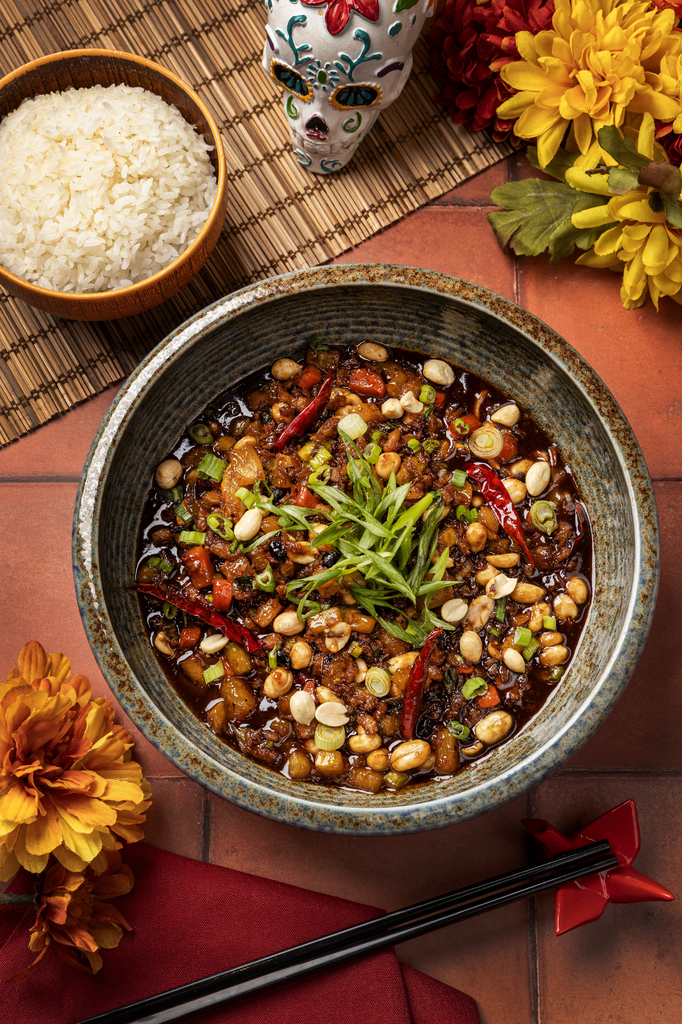
China Poblano in The Cosmopolitan of Las Vegas celebrates Día de los Muertos (Mexico’s Day of the Dead) from October 26 through November 8 this year with a special holiday menu that includes two traditional Mexican dishes: a duck tamal with mole negro and a hearty beef stew called mole de olla. But the most meaningful item on the menu may very well be a Chinese dish called Combination #2.
The dish is a spicy variation on kung pao chicken, created by a chef who helped open the Chinese/Mexican restaurant by Chef José Andrés. He passed away a few years ago, and his creation is being served in his memory.
Honoring Those Who Came Before Us
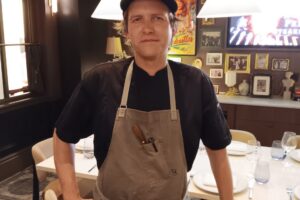
Día de los Muertos is a Mexican holiday devoted to remembering and honoring loved ones who have died. Explaining it on the Food and Loathing podcast, China Poblano’s head chef Carlos Cruz-Santos said, “We don’t really fear death as much as we honor everybody that’s come before us.”
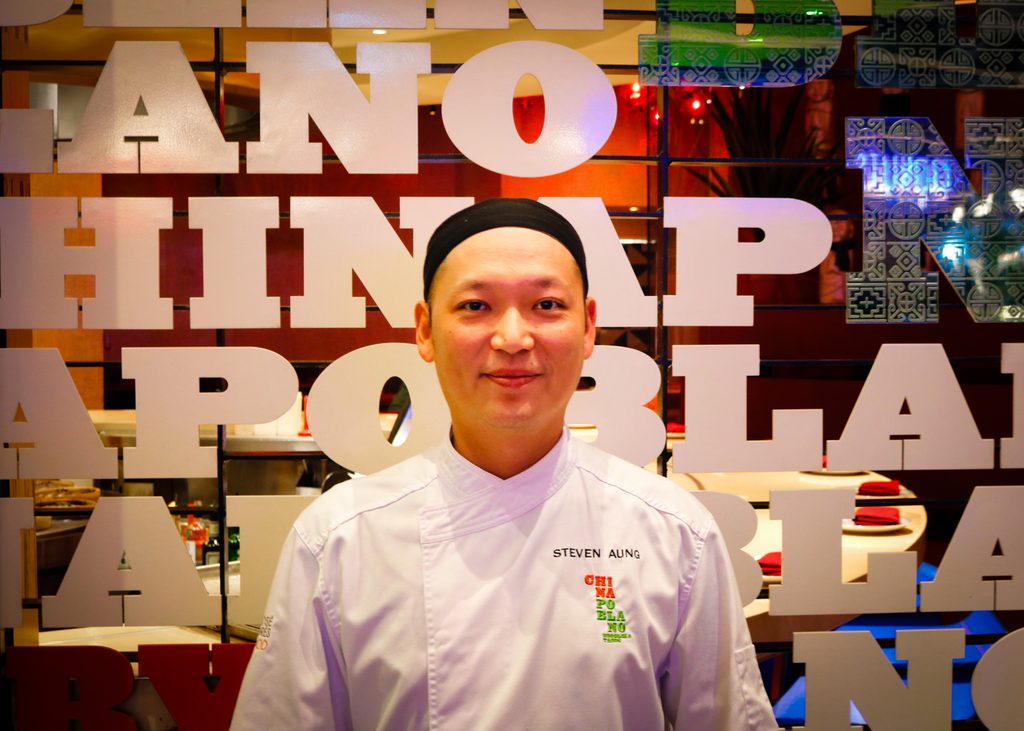
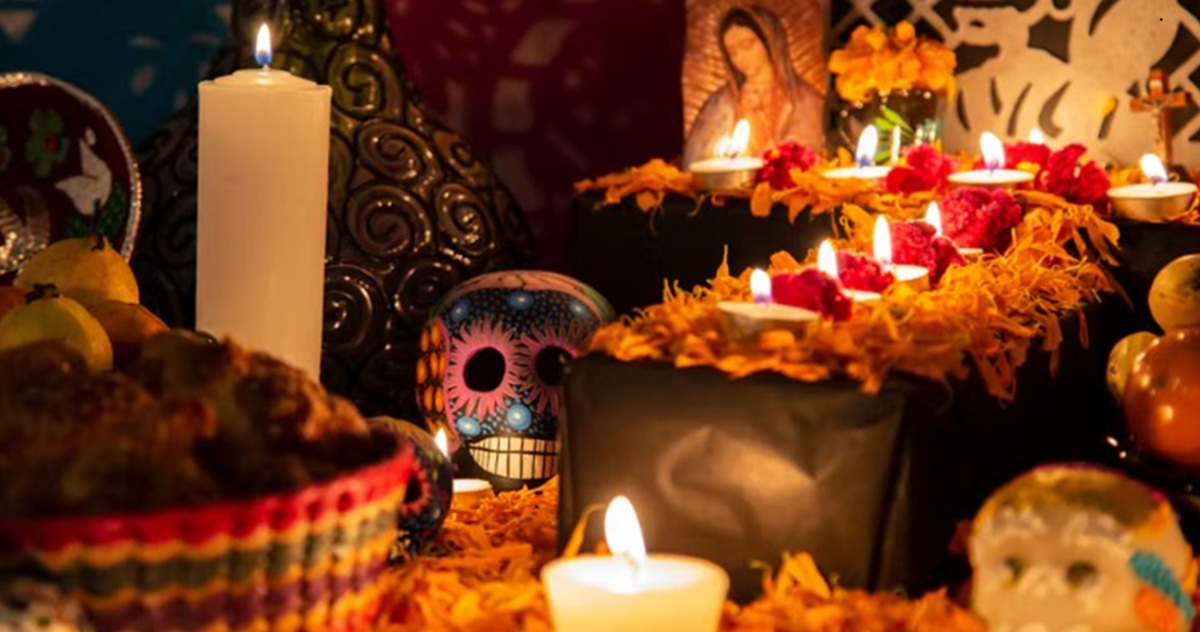
In many Mexican homes, families do that by building ofrendas, altars, decorated with photographs, flowers, food and other offerings to welcome the spirits of the deceased. And this year, China Poblano’s ofrenda will be dedicated to Chef Steven Chin (also known as Maung Than Aung). A member of the kitchen team since 2010, he helped shape the restaurant’s Chinese menu.
Remembering An Influential Chef
Born in Myanmar in 1979, Chin joined China Poblano when it opened at The Cosmopolitan of Las Vegas in 2010. Starting as a dim sum cook, he eventually worked his way up to executive sous chef.
According to a tribute prepared by the restaurant, he spoke Mandarin, Cantonese, English, Burmese and some Spanish, and was known for his ability to connect with people from different backgrounds. He was also an avid fisherman, a mentor and a friend to his colleagues.
“His incredible understanding of Chinese cuisine and flavors made him a visionary in our kitchen,” the tribute reads, crediting his creativity with enriching many dishes on the menu.
Cruz-Santos remembers him as an important part of the restaurant’s development.
“He was instrumental in helping to create a lot of the dishes that we serve here now,” says Cruz-Santos. Moreover, the chef added, Chin helped create Chinese dishes served at Andrés’ China Chilcano restaurant in Washington, D.C.
But the dish being served in Chin’s honor this year wasn’t one of his signature menu creations. It was something he made for his coworkers.
“He would just make [it] for family meal, and he would make [it] as just a snack sometimes,” Cruz-Santos recalls.
Chin called it Combination #2, a version of kung pao chicken with extra chiles, spices and sauce. And when the kitchen decided to serve it for Día de los Muertos, they kept the name he gave it.
Two Cultures, One Celebration
Including a Chinese dish on a Mexican holiday menu makes particular sense at China Poblano, where the relationship between two seemingly unrelated cuisines is central to the restaurant’s identity.
When José Andrés created the restaurant, he drew inspiration from the Manila Galleons, the trading ships that connected Mexico and the Philippines for centuries and facilitated an exchange of ingredients, flavors and culinary traditions between Asia and the Americas. Rather than creating a fusion restaurant that blends the two traditions into one cuisine, the celebrity chef chose to present Chinese and Mexican cooking side by side, telling a story about their historical connections.
Now, that approach has created an opportunity to honor an Asian chef through a Mexican tradition, using a Chinese dish he created.
Asked if this is an instance where stepping outside the Mexican culinary tradition is, nonetheless, a perfect way to embrace the spirit of Día de los Muertos, Cruz-Santos replied, “Exactly! It’s an honor.”
A Holiday Menu
Combination #2 is one of three featured dishes on China Poblano’s Día de los Muertos menu.
The Tamal de Pato con Mole Negro ($16) features heirloom corn masa stuffed with slow-roasted duck and Oaxacan black mole, steamed in a banana leaf and finished with habanero salsa, Maldon salt and shaved piloncillo.
The Mole de Olla ($28) is a hearty stew of oxtail and beef shank simmered in a broth flavored with ancho and guajillo chiles, accompanied by vegetables including chayote, squash, carrots and corn.
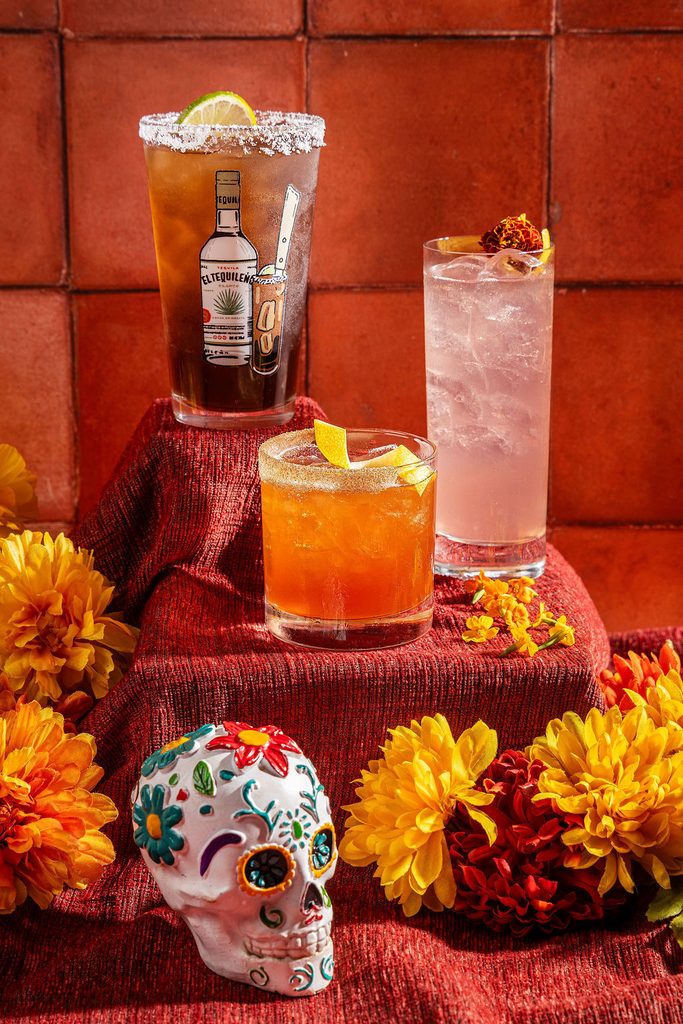
The restaurant is also offering several holiday cocktails, including Love Never Dies, made with mezcal, strawberry, cinnamon, clove, lemon and brown sugar; and Welcome Home, which combines reposado tequila, elderflower, lemon and marigold. (Marigolds are traditionally associated with Día de los Muertos, as their bright colors and fragrance are believed to help guide spirits back to the world of the living.)
For Cruz-Santos and his team, the celebration is about more than seasonal food and drinks. It’s an opportunity to remember the people who came before them, including someone whose work remains part of the restaurant today.
This year, one way they’ll remember Steven Chin is by cooking something he used to make for them.
China Poblano’s Día de los Muertos menu is available now through November 8, with a live band performing traditional Mexican mariachi from 6 to 8 p.m. on October 31. Hear our full interview with Carlos Cruz-Santos on the October 23 episode of the Food and Loathing podcast