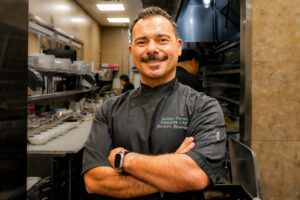
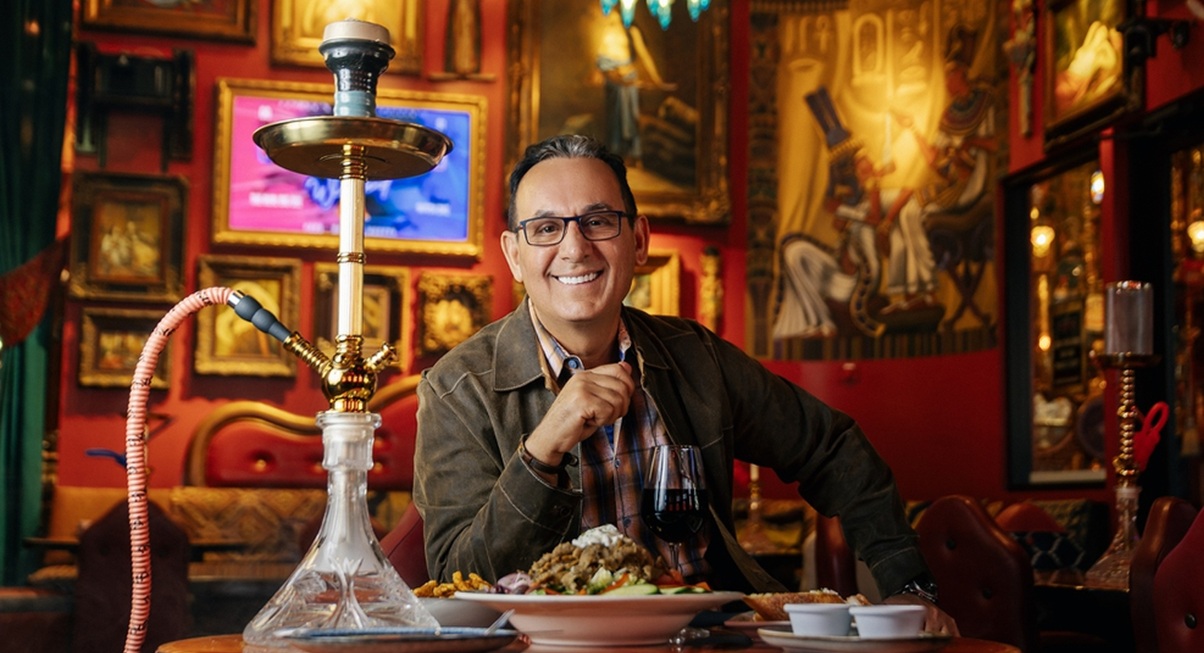
The founder of Paymon’s started with three plastic tables, Turkish coffee and baklava. Nearly four decades later, he’s serving the grandchildren of some of his earliest customers.
18 Million Meals
When Paymon Raouf recently calculated how many people his restaurants have served since opening his first in 1988, even he was surprised by the number.
Across the various Paymon’s locations he has operated over the years, Raouf estimates the total at roughly 18.2 million covers. For an independent Las Vegas restaurant, it’s a staggering figure. But Raouf sees something else in it.
“That shows how people support a small business,” he says. “I am so thankful. I am so grateful for our customer base.”
Five Decades of Las Vegas
The calculation came as Raouf marked his 38th anniversary as a Las Vegas restaurateur this month. From the end of the 1980s through the turbulent 2020s, he’s seen the city evolve, and helped feed that evolution.
He’s seen big changes in what the town looks like, how it operates and, most importantly, what it eats. Once-unfamiliar foods like hummus and falafel have become supermarket staples. And customers who first walked into his restaurant as young adults are now returning with children (and grandchildren) of their own.
And it all started with three plastic tables.
From Market to Paymon’s
Raouf started with a small grocery called Middle Eastern Bazaar at Maryland Parkway and Flamingo, near UNLV. Inside were three plastic tables and chairs, where he served Turkish coffee and baklava.
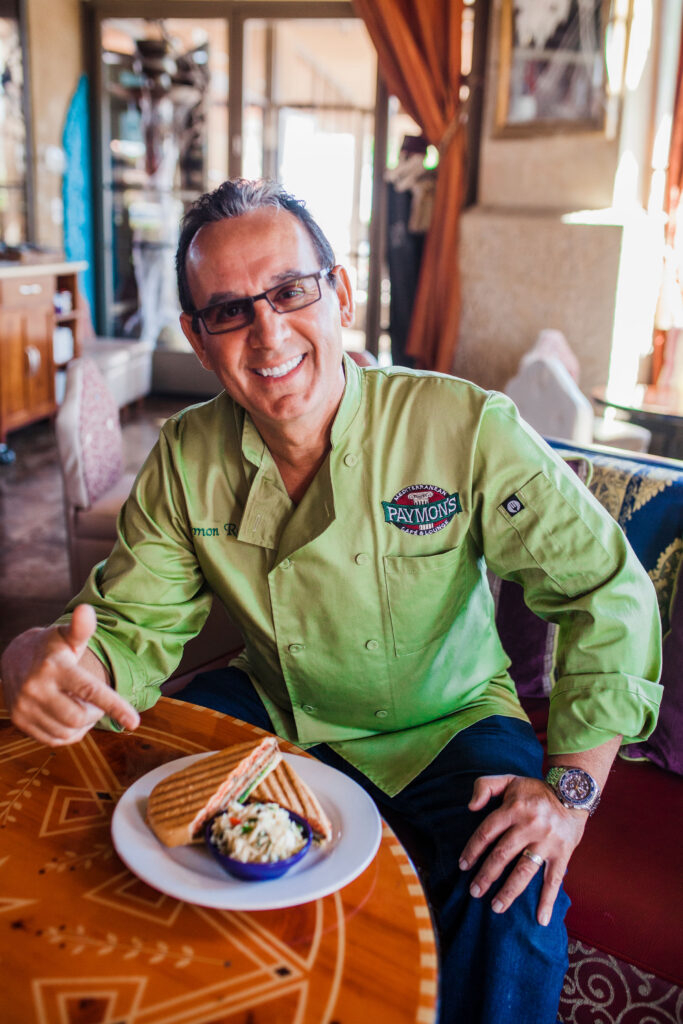
Then a customer walked in and asked, “What do you have to eat?”
Raouf wasn’t a chef and didn’t have a menu. But he had pita bread, mayonnaise and mortadella — and rent to pay. So he made a sandwich.
When the customer asked how much it cost, Raouf improvised: $1.99.
The next day, the man returned with two friends who wanted the same thing.
“And that’s how it started.”
Without a culinary background, Raouf still needed recipes. He began trading roughly $50 worth of groceries to older women from Las Vegas’ Greek, Lebanese, Armenian, Persian and other communities in exchange for recipes. His mother later contributed recipes as well.
Many became the foundation of the restaurant’s menu.
Today, hummus occupies entire sections of supermarket refrigerators. Raouf remembers when Las Vegans barely knew what it was.
So he took it to them.
Raouf would prepare samples, walk into the street with a tray and approach cars stopped at the traffic light.
“They said, ‘Normally people beg in the middle of a street. You are giving us food.’”
He’d point toward his restaurant and invite them to visit. Sometimes he’d see drivers make U-turns — then race back inside to get behind the counter before they arrived.
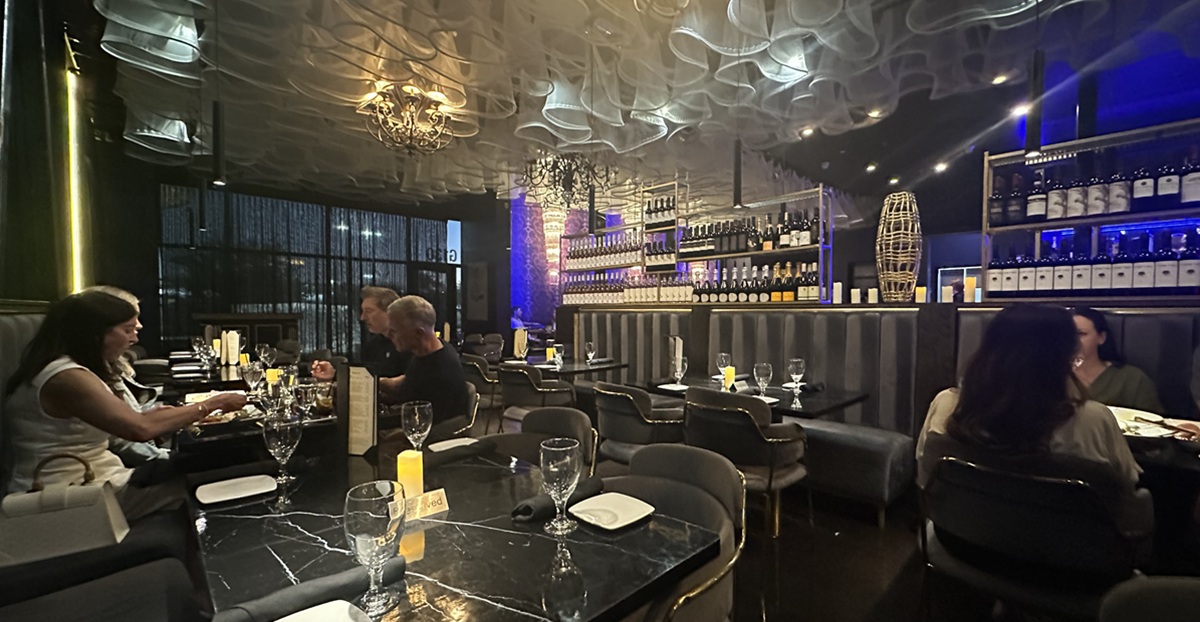
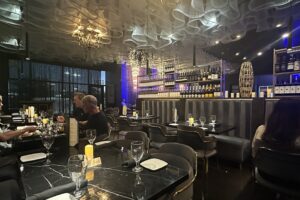
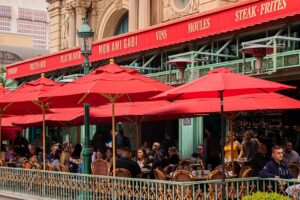
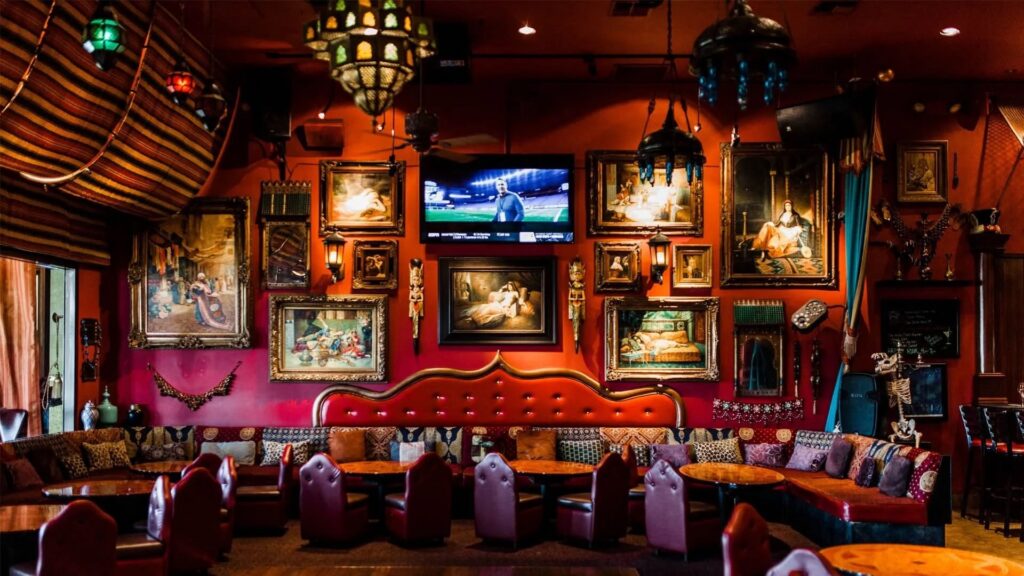
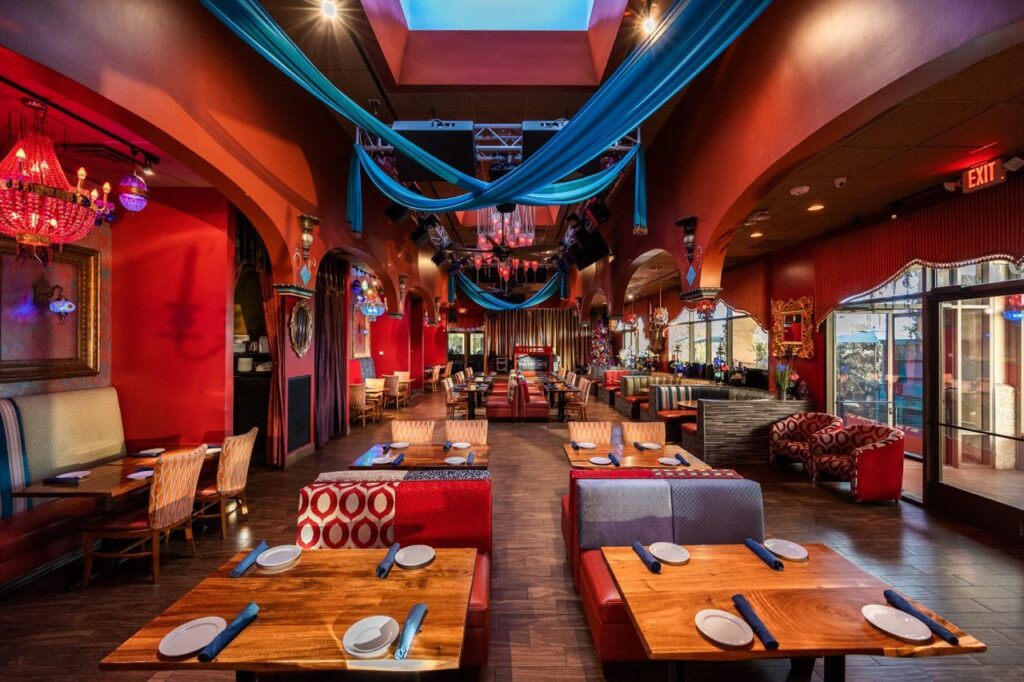
The grocery gradually became a cafe, then a lounge and eventually Paymon’s. The original Maryland Parkway restaurant lasted 31 years. Today, Paymon’s operates a restaurant and hookah lounge at 8380 W. Sahara Ave.
Serving Three Generations
Many customers have been along for much of the journey.
“If you were 30 years old, and then you got married, and then you came with your wife, then you had children, and now those kids are 30 years old,” Raouf says.
“I have the pleasure of serving three generations now.”
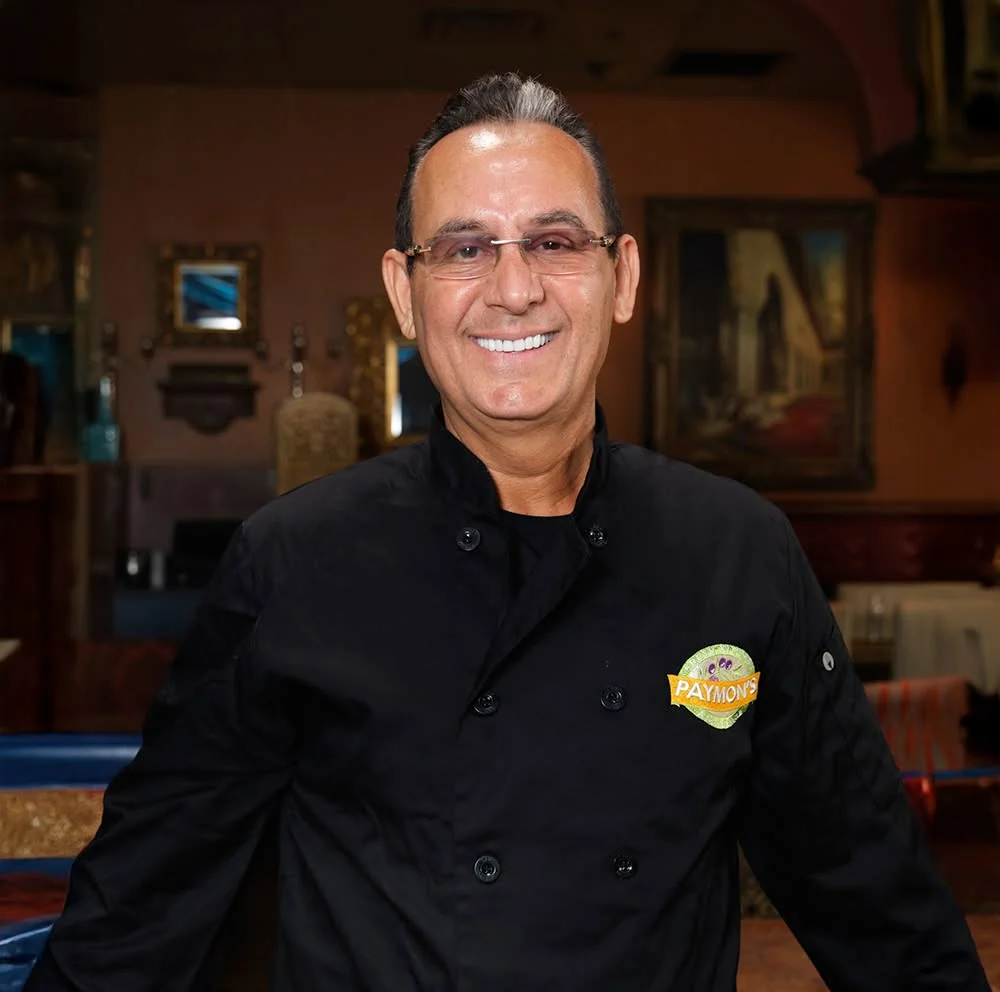
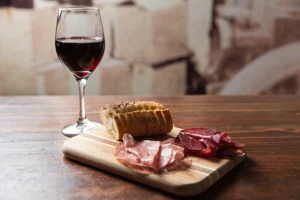
And despite all that change, some things haven’t budged. Asked which menu items go all the way back to the beginning, Raouf immediately names Greek salad, Turkish coffee and baklava.
After 38 years, Raouf is also concerned about the challenges facing independent restaurants, which don’t have the advertising resources of national chains and large restaurant groups.
So his anniversary comes with a request for Las Vegans: If you enjoy an independent restaurant, support it.
“Walk in and show your support to them,” he says, “because today they need you more than ever.”
After 38 years, Raouf has considerable evidence that Las Vegans are capable of doing exactly that.
About 18.2 million meals’ worth.