
Often, a restaurant’s kitchen leaders are also its unsung heroes, toiling behind the scenes to provide a pleasurable dining experience for the eatery’s patrons. In this series, we shine a spotlight on talented, creative, and unique individuals who have become, or are becoming, the culinary superheroes of our city, and explore the paths they have taken to establish themselves as rising, or recognized, gastronomic stars.
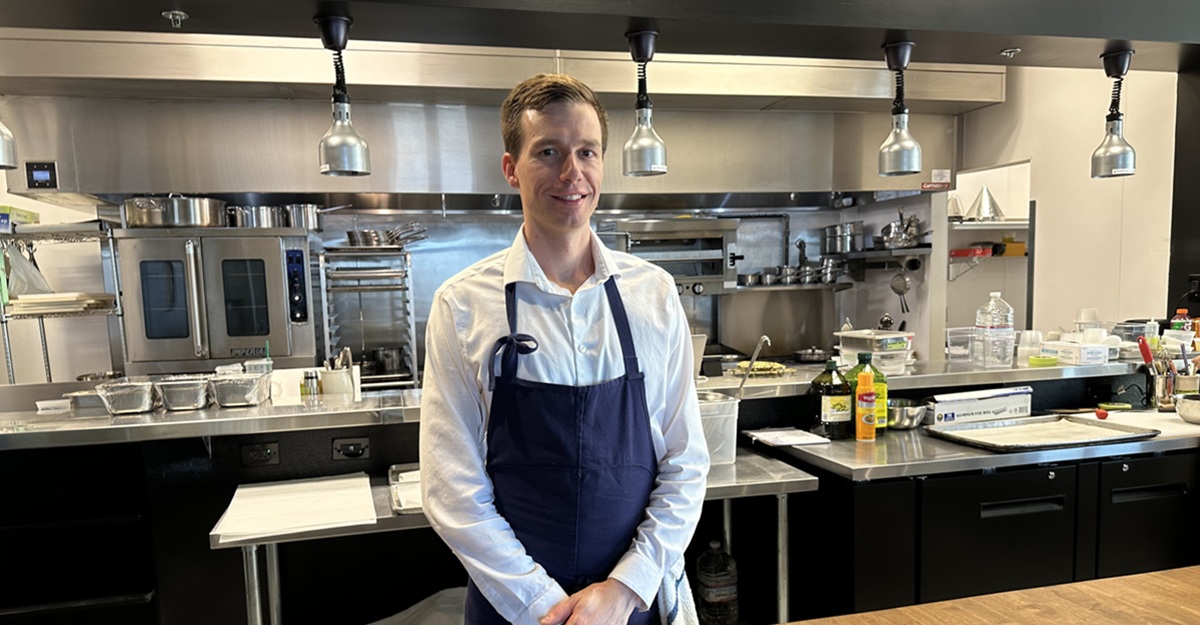
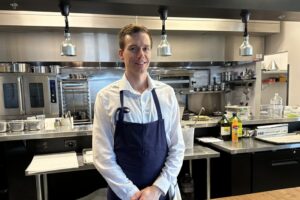
In this chapter we introduce you to Guatemalan-born Steve Kestler, who showcases an innovative approach to Latin cuisine with global influences, as he continues to chart his career path and indulge his passion for innovative cooking. After working in high-end fine dining establishments on and off the Vegas Strip for more than a decade, the chef went out on his own to open Aroma Latin American Cocina as Executive Chef and Co-Founder in 2021. The restaurant quickly established itself as a standout in the culinary scene and Chef was a nominee for the coveted 2024 James Beard Foundation’s Best Chef: Southwest award.
What made you decide to become a chef? How old were you, and how did you make that happen?
Every time I ate something delicious, I always thought to myself, it’ll be really nice to learn how to cook that. I was always curious about how to make a pizza, or a sushi roll, or a tortilla from scratch, and so on. So, my first plan after high school was to go to music school, which I did for three years. I was trying to make a living out of music, which was really impossible back in Guatemala, and that’s when I thought, “I always wanted to learn how to cook, so I should give it a try.”
I remember I enrolled in culinary school for the basic course of one day a week. And after that first day, I signed up for the rest of the program, and was attending school every day all day. It really changed my life, and for good. I [traded] my drums for pots and pans.
I was 25 years old at the time, so I knew I needed to bring my game the best I could. And to this day I’m always taking courses online, reading books, and trying to be updated in all aspects of cooking. The journey to become a chef never ends; it is an everyday process.
Tell us about what brought you to Las Vegas.

I was born and raised in Guatemala City, and moved to the US in 2010. First, I lived in Austin, Texas for about three years, where I worked for Chef David Bull. It was a really good start here in the US, and at that time I was planning to move to New York City with the goal to work at some of the city’s best restaurants. But I came to have short vacations in Vegas. And once here, I was in love with this city, and couldn’t believe how many good restaurants there were on the Strip.
I thought I could be here and work at different restaurants to acquire knowledge from the best. At that time, I also couldn’t believe how affordable it was to live here. These two things sealed the deal for me to move to Vegas, so I realized I needed to move here first. So I did, in 2013. Now 12 years later I can’t believe how much it is growing out of the Strip, and it’s been amazing to see how many great restaurants you can enjoy everywhere now.
I was lucky enough to land a job at Bouchon by Thomas Keller. This is where I think my backbone in the kitchen started to get real strong, and I stayed there for three years.
I was curious enough about other restaurants in Vegas and decided to move on to a new experience. So I went to have dinner at 20 different restaurants that caught my attention for what they were cooking. It was after having dinner at Bazaar Meat by Jose Andres that I found what I was looking for, and (working at) Bazaar also gave me all the tools to grow my confidence to do something on my own, which was a dream since the first day!
Who were some of your early mentors that you learned the most from?
The three jobs that are highlights in my career are Second Bar + Kitchen in Austin, Texas, Bouchon by Thomas Keller at the Venetian, and Bazaar Meat by Jose Andres at the Sahara.
At these three restaurants I met some great chefs that helped me in the process to become one myself. At Second Bar + Kitchen Jason Stude and Monica Sinclair taught me that you need to be fearless, and even when you are the boss, you are the one working harder and lead by example. I was always amazed by how hard they work alongside the rest of the staff; they were always teaching me good ways to do things!
At Bouchon by Thomas Keller, Matt Alba and Josh Crane taught me the soigné aspect of cooking: that every single little detail matters from the way you enter the kitchen at the beginning of the shift and shake hands with everybody, to how to put a proper label on a container, to how to work efficiently every second to develop a real sense of urgency.
At Bazaar Meat by Jose Andres, Alex Pitts, David Thomas, and Frank Medina taught me you can add a lot of joy, creativity, and fun, that it’s okay to mix rustic with modern, and that not everything is about the budget, but to have the best result of what you need at all cost. They gave me a lot of opportunities to express myself by creating dishes for the specials menu every week.
Tell us about Aroma Latin American Cocina. Why did you name it Aroma and how is it different from other Latin American restaurants?
When I was thinking about a name for the restaurant, I had so many memories at my mother’s house saying wow that smells really good. The aromas you get at the markets back home when you pick up a mango and the smell of it stays in your hand, or when you’re cooking that sofrito and you can really smell all those ingredients coming into one aroma, or when you are squeezing fresh limes and you get that vibrant lime scent from it. I think the word Aroma is one of those words that can say a lot about what cooking is about.

I think our biggest difference from other Latin American restaurants is that we don’t cook one specific country’s cuisine. There are a lot of Mexican restaurants or Peruvian restaurants or Brazilian restaurants. But here we try to bring a little bit from Guatemala, Mexico, Peru, Colombia, Argentina, and on and on and on. At Aroma, you can enjoy a taco from Mexico or a ceviche from Peru or a churrasco from Guatemala. We bring ingredients from the region, not only from a specific country, and celebrate all Latin American foods. Most of the Latin American countries share so many similarities when it comes to cooking.
And [it’s] not only Latin American. We also bring some Asian and European influences. We need to remind everyone that the Chinese and Japanese immigrants that landed in Latin America after the Second World War brought a lot of their cooking to us, and also all the ingredients that were brought after the [Spanish] conquest.
What are some of your favorite dishes currently on your menu?
Churrasquito: it’s a celebration of family having lunch on Sunday, when all the families get together bringing different sides and often the host of the lunch grills meats over charcoal.
Peruvian Ceviche: Leche de Tigre is so refreshing, so good, I often find myself having a shot of it as if it was tequila.
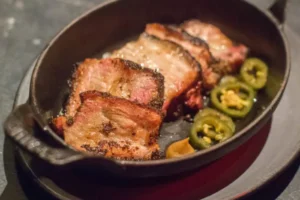
Ribs and Mole: meat so tender with probably the most complex “sauce” in our menu. It is so good, we often have customers asking if they can buy a jar of our mole to take home.
How do you come up with your recipes? What are some of your favorite ingredients you like to use in your recipes?
We have a few guidelines when it comes to developing new dishes.
1) If the customer can make this at home, then it’s not a restaurant quality dish, so it’s not flying out the door.
2) If the flavors are good but the presentation is not, or the presentation is good but the flavors are not, then it’s not making it to the menu.
3) What ingredients are we using, from what region, what country, what is the Latin American aspect to it, where does it come from, and what is going to be our twist?
Some of my favorite ingredients to use are dried chiles, fresh chiles, masa, and all forms of corn, fruits, and nuts.
You’ve garnered some impressive accomplishments. Which ones are you most proud of?

Definitely to be a finalist in the James Beard (Best Chef: Southwest award) in 2024 was huge for me. So many chefs that I admire are recipients of this award, so to be nominated as they were, was such a huge honor.
Aroma Latin American Cocina was ranked the #1 Taco Spot in the United States on Yelp’s “Top 100 Taco Spots” list for 2023. That was also amazing. Just imagine how good tacos are in this country and to be the number one was unbelievable.
What do you think of the Las Vegas culinary scene?
It is exciting to see everything that is going on in Las Vegas right now. It’s growing all the time with so many good restaurants and so many good chefs behind them. I can’t wait to see where the city is going to be in 10 years. It makes me really happy and proud to say that you don’t need to go to the Strip anymore to find great food.
What do you like to do in your down time, when you’re not working?
Right now, my life revolves pretty much around food, so when I’m not at the restaurant, I’m reading cookbooks, taking courses online, or checking out nearby restaurants. Not much going on besides that.
What are your plans for the future? Do you intend to stay in Las Vegas?
The future looks bright. I think I have a lot more to give to Vegas, so definitely I’ll be here for some time. I’ve been thinking about an Argentinian Japanese steakhouse. Who knows, maybe that’s going to be my next project in the near future.