
You don’t often get the opportunity to interview the creator of a modern classic cocktail.
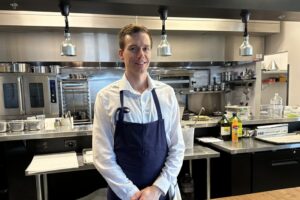
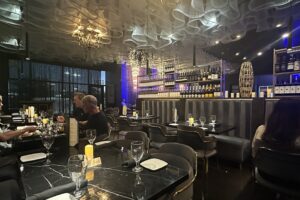
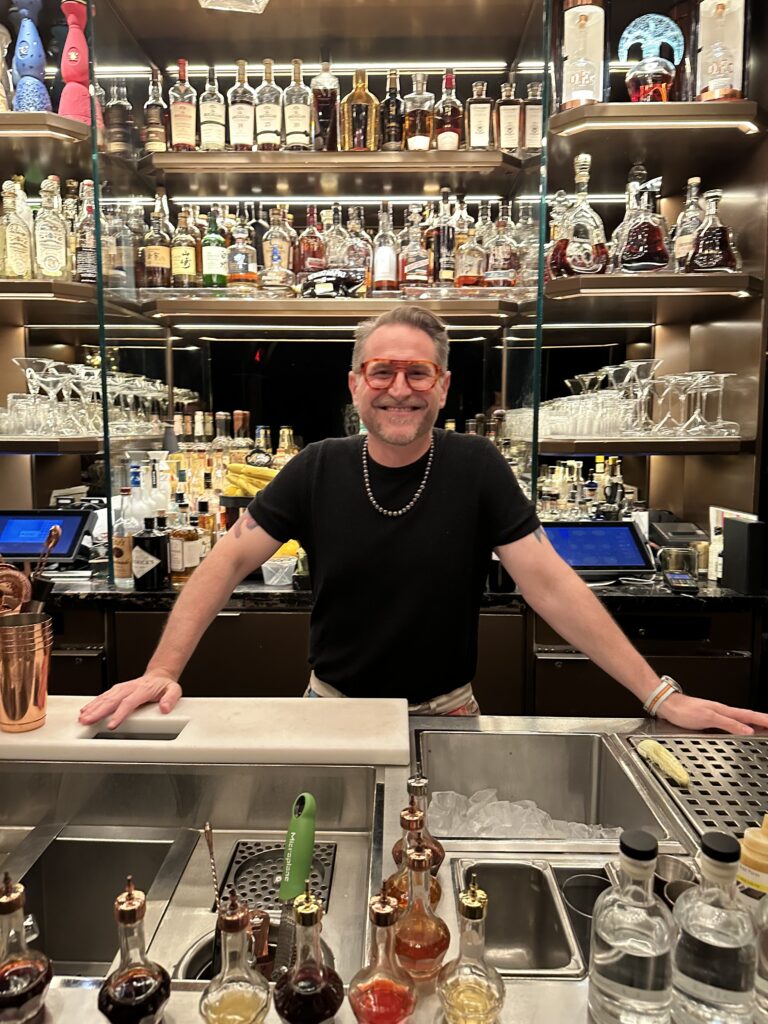
Bellagio’s Liquid Legends series provided that opportunity when Joaquín Simó visited The Vault for a two-night appearance on July 10 and 11. Before the bar opened for the evening, the former Death & Co. bartender sat down with Food & Loathing to discuss the creation of the Naked & Famous, the community that helped transform New York City cocktail culture and what it feels like to be labeled a “Liquid Legend.”
Is This Going To Be Popular?
The Naked & Famous has become a staple of cocktail bars around the world in the years since Simó created it at Death & Co. in 2011. But he never expected it to be the one drink from his extensive catalog that would achieve that kind of longevity.
“You never really think when you’re coming up with a drink: Is this going to be popular? Is this going to have longevity or staying power?” Simó said.
Had he been asked to predict which of his creations would endure, he said he probably would have chosen the Kingston Negroni, Flor de Jerez or Carroll Gardens.
The Naked & Famous, however, showed signs of catching on before it even appeared at the bar where it was created. The drink had already landed on the menus at Teardrop Lounge in Portland, Oregon, and at Candelaria in Paris.
“Even before it was on the menu of the bar that it was created at, it was already 3,000 miles east and 3,000 miles west,” Simó said. “So I kind of had an inkling that it was going to do okay.”
Mezcal Gets Its Moment
The drink is an equal-parts combination of mezcal, yellow Chartreuse, Aperol and lime juice. Simó based its structure on the Last Word, while drawing inspiration from cocktails created by colleagues including Sam Ross’ Paper Plane and Phil Ward’s Division Bell.
It also arrived as American bartenders and drinkers were beginning to take mezcal more seriously.
Simó credits Ward, a member of Death & Co.’s opening team who later opened the nearby agave-focused bar Mayahuel, with helping to lead that movement. Ward’s Oaxaca Old Fashioned, which combined tequila and mezcal, introduced many New York drinkers to a spirit that was still difficult to find in high-quality expressions.
“That was the original iconic drink from that bar, and it had a smoky mezcal to it,” Simó recalled. “Right from the start, I think we knew we were going to be playing around with stuff like that.”
NYC’s Cocktail Renaissance
Death & Co. opened in New York’s East Village in 2007, as a small community of bartenders was beginning to reshape the city’s cocktail scene. Simó remembers carrying a piece of paper in his wallet listing respected bartenders, the bars where they worked, and the nights they could be found behind them.
“You were still kind of playing ‘chase the bartender’ around there,” he said. “You were like, ‘I can go get a good drink at this place because I know who’s working there that night.’”
As more serious cocktail bars opened in New York and other cities, their bartenders formed a community that Simó remembers as collaborative rather than competitive.
“We all realized that a rising tide lifts all boats,” he said.
When a particularly enjoyable guest visited one bar, the staff might send that person to another establishment with a “boomerang”: a glass filled with liquor or a cocktail, sealed with an inflated rubber glove and decorated with a cheeky message.
The package treated the receiving staff to a drink while signaling to the person at the door that the bearer had been vetted by friends in the industry.
“The reason it was called a boomerang is [that] if you sent someone awesome, you were always hoping they would then send you a great guest,” Simó explained.
Liquid Legends
Those stories help explain the idea behind Liquid Legends. Curated by The MGM Resorts beverage team, the yearlong series brings influential bartenders, writers and historians to The Vault to create limited-run menus and interact with guests. In practice, it also serves as an in-person oral history of cocktail culture, told in chapters by the people who helped shape it.
Simó was visibly uncomfortable applying the word “legend” to himself.
“I can’t say those words out loud because I’m just going to be blushing, and you’ll even hear it over the microphone,” he joked.
But the invitation gave him an opportunity to revisit drinks he never expected to make again, using The Vault’s collection of vintage and difficult-to-find spirits. His menu included Dangerous Summer, a stirred variation on the Blood and Sand that he originally created around 2009 or 2010 with Yamazaki 12-year Japanese whisky.
At the time, the drink attracted little attention. Today, seeing an age-stated Japanese whisky in a cocktail is enough to make many drinkers take notice.
“To be able to revisit that drink now, and to have people really understand what was going on with that base spirit, is really fun,” Simó said. “They have such an incredible war chest here.”
Guests may come to Liquid Legends for the rare spirits and cocktails. But it’s the stories they’ll likely remember for years to come.
“I still love doing guest shifts,” Simó said. “I still love being able to go out and explore new markets.”
If you missed your chance to hear Simó’s stories, the next installment in the Liquid Legends series, featuring David Wondrich, will take place on August 6 and August 7 at The Vault.
Hear our full interview with Joaquín Simó on the July 17 episode of the Food and Loathing podcast.